Dr Raphael Cohen Susewind
Associate Professor (Education) in Qualitative Methods at the London School of Economics and Political Science, facilitating pedagogic innovation and training the next generation of social scientists across disciplines
Associate Professor (Education) in Qualitative Methods at the London School of Economics and Political Science, facilitating pedagogic innovation and training the next generation of social scientists across disciplines
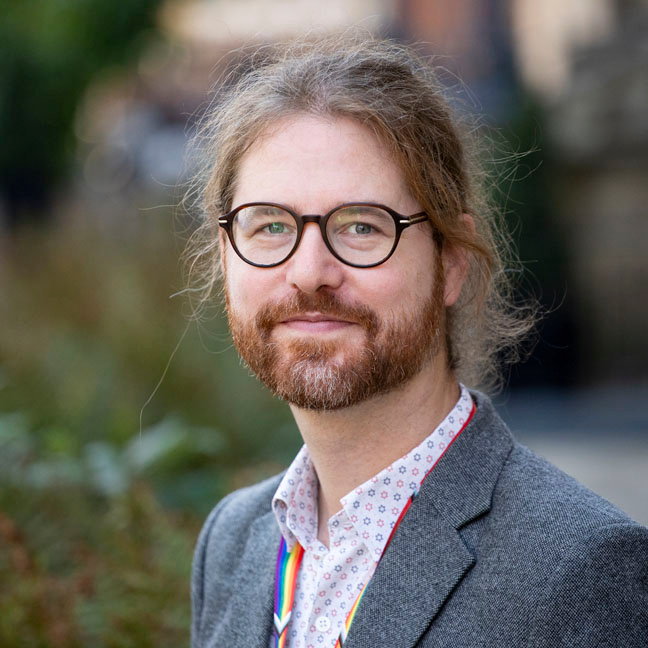
I am a political anthropologist of urban India with degrees in political science, area studies and a PhD in sociology / social anthropology. I believe that engagement, not detachment, and the fostering of relationships, vulnerability and personal curiosity grounded in a life beyond academia all lead to better social science — an approach that shaped my own ethnographic research, and an intuition I now try to teach my students across disciplines.
Before joining the Department of Methodology at the LSE, I worked as Lecturer in Social Anthropology & Development Studies at King's College London and before that as postdoctoral researcher at the Max Planck Institute for the Study of Religious and Ethnic Diversity in Göttingen. My doctorate was from the BGHS Bielefeld (Joanna Pfaff-Czarnecka), co-supervised at the Contemporary South Asia Studies Program at Oxford (Lucia Michelutti) where I also did my Masters. My first degree was from Marburg in political science.
Within my department I serve as ethics coordinator, and from Winter Term 2027 onwards I convene our MSc Social Research Methods. Beyond the department, I am a Senior Fellow of the Higher Education Academy and a mentor and assessor on their professional development recognition scheme, and Independent Ethics Adviser to Andrea Cornwall's ERC Advanced Grant TROUBGEN — 'The Trouble with Gender'. I am one of the associate editors of the Journal of South Asian Development and have for many years served as reviews editor of Contemporary South Asia. I am also a local rep and caseworker for the University and College Union, and was the LSE branch secretary in 2025/26.

At the Department of Methodology, I convene our MY421 introduction to qualitative methods and I co-convened MY400 research design. I also work on MY405 research design for policy and programme evaluation and supervise Master's dissertations on MY499. Much of the rest goes into doctoral methods training: on our MY580 short courses, in our Methods Surgeries, at the PhD Academy and across the ESRC Doctoral Training Partnership. For the latter I served as Development & Training Lead for its first three years, designing and implementing a new mentoring process built around holistic researcher development (using the Vitae wheel), and representing us in a UK-wide network for good practice on doctoral training.
At King's, I used to convene undergraduate modules on 'Social justice: Ethnographic perspectives' and 'Development issues in South Asia' and a postgraduate module on 'Advanced qualitative methods'; the syllabi below are kept as an archive. Current teaching is linked directly to the live course pages above, and LSE students can reach all Methodology course material on Moodle by self-enrolment.

Teaching to me is at its core mentoring: as a teacher I facilitate other people's learning — which in practice often means letting students into my own research. Several rounds of King's Undergraduate Research Fellows for instance worked with me on my Lucknow mapping project, and I do use my published work in class to unpack how it was actually made, inviting students to take it apart. Actively criticising teaches more about how knowledge production works than being told what works, and it does more for trust in the room than any amount of blanket reassurance. And God knows my Gujarat book in particular was an example of how not to design research...
Many of my classes also carry weekly micro-writing and peer-editing tasks: short, frequent, low-stakes writing that makes thinking visible. The evidence is clear that international students and those from widening-participation backgrounds have the hardest time building effective writing habits at a UK university — and interpretivist work asks more of them still, relying on persuasive prose to carry resonance and on memo-writing as a working analytical method. Writing across the curriculum helps students revise substance and sharpen clarity; it also, in my experience, activates a large room that would otherwise stay quiet. Below is a quick-reference card set of techniques if you want to experiment with them, and a Claude skill that builds reading worksheets — a brief orientation, a few things to read for, then blank space for your own verdict — which you can point at whatever you are about to read; in my publication list below I ran it on my own work so you can see what it produces.
That second one is, I think, a good exmaple what constructive use of AI tools for learning in higher education can look like. The orientation is drafted by a model and labelled as such, but the whole design is to deliver micro-writing tasks that encourage deeper learning and judgment-formation. A time-strapped colleague gets a worksheet built on a tried pedagogic logic rather than a shortcut; a student gets something that scaffolds their reading rather than supplanting it with a summary.
Last not least, I try to keep sight of students as people with lives outside the classroom. Five years as senior tutor for postgraduates, most of them through the pandemic, made that hard to forget. Small things carry more than they should: I stopped calling my office hours office hours and started calling them open hours: LSE students can book them here.

Taught Master's students can read and critique research long before they can make any of their own. They arrive with a topic instead of a question, a reading list instead of an argument, and a single short stretch of months in which to finish. '23 Curious Questions for a Better Dissertation' is my attempt at teaching that move: twenty-three plain questions of the kind a supervisor asks across a table, sequenced as a path from first idea to final draft, each meant to be answered in one disciplined sentence before moving on. The four parts read like a staircase but behave like a roundabout — answering a later question regularly sends you back to revise an earlier one.
It has travelled further than I expected: at King's, where I first used it, colleagues across the department took the framework up for their own supervisions. It structures how I supervise at the LSE, and I am slowly expanding it into a fuller guide for both students and the people who supervise them. I welcome any feedback on the questions, especially from students.
That work is also where I have put my thinking about generative AI. These tools have unsettled the dissertation on three fronts at once: how students write and learn, how fairly the playing field sits between them, and how supervisors can still vouch for a piece of work. Questions turn out to be a reasonable answer to all three, because what they ask for is judgment rather than prose — and judgment is the one thing a language model cannot supply on your behalf. A template invites you to fill it in; a question has to be answered. I would much rather students used AI as a sparring partner than as a ghostwriter, and the questions are built with that in mind.
Doctoral supervision is the ultimate 'teaching as mentoring' process: PhDs start as students and end as colleagues. My supervision approach is thus to ask rather than tell, and to let the student set the direction of the conversation. Mentoring goes beyond the PhD itself: Where requested, I offer teaching observations and feedback, co-authorship where the work is genuinely joint, introductions to my networks, and an honest reading of the job market. At least that is what I aspire to; before you consider working with me, please ask my past students, in confidence, what I am really like as a supervisor.
I served as supervisor for Nirali Joshi's dissertation on death across Mumbai's suburban railways (with Ruth Craggs and initially Jahnavy Phalkey), Sudhir Selvaraj's dissertation on anti-Christian violence (with Humeira Iqtidar and initially Sunil Khilnani), Vanita Leah Falcao's dissertation on the politics of digitising welfare rights (with Louise Tillin), Harsh Pratap Singh's dissertation on agrarian and communal relations in Uttar Pradesh (with Nithya Natarajan) and for a bit Wajiha Humayun's dissertation on urban transformation in Amman (with Mayssoun Sukarieh). Nirali subsequently took up a Putspace fellowship in Leipzig to write on people 'lost in mobility' while Sudhir moved to a permanent position at the University of Bradford, Vanita continues to work in London and Harsh joined Bath Spa University as a Lecturer on the Foundation Year programme at their London campus. I examined Sarayu Natarajan's dissertation on brokerage in Bangalore, Arvind Kumar's dissertation on caste in candidate selection and Nilanjana Sen's dissertation on ethical selfhood in the Himalayas. I have acted as independent chair for vivas when needed, and regularly as upgrade examiner.
I currently serve on the advisory committee for Qurattul Ain Maryam's dissertation on spatial histories of Kolkata (supervised by Deepak Malghan). I welcome PhD proposals that concern popular politics, religion and/or the political economy of contemporary South Asia, typically in collaboration with colleagues in one of the LSE's disciplinary departments - send me an email if you want to work with me.

While my current role is focused on teaching and educational leadership, my take on methodology is based in over a decade of mixed-method and ethnographic research experience. I studied religious politics, the political economy of corruption, masculine aspirations and urban belonging in North India, building on ethnographic, statistical and spatial data generated in long-term fieldwork among the country's large and diverse Muslim population. Much of my ethnography was based in the city of Lucknow, often seen as a 'space with too much history' (as explored together with historians in a special issue of SAMAJ edited with Chris Taylor). I have also written research software and contributed to open data initiatives, and I curated a comprehensive public repository of statistics on religion and politics in India based on electoral data - still online, no longer updated. The raw electoral rolls behind it are archived with restricted access on Zenodo, under a privacy notice.
While much work on religion and politics in India aims to understand Hindu-Muslim riots, engineered by politicians who exploit communal prejudice for electoral gain, and in the process tends to treat Muslim Indians as a monolithic block, my ethnographic research pays closer attention to religio-political dynamics within religious communities and asks how these intersect with growing aspirations for 'development'. My monograph on ambivalence and ambiguity in Gujarat for instance studied the production of peace (rather than violence) by showing how both developmentalist and faith-based activists link political protest to religious ideas and communal belonging in a post-conflict setting.
Through subsequent mixed method publications, I then revealed the fallibility of instrumental calculations in fluid religio-political contexts and demonstrated how Muslims' electoral choices mirror those of non-Muslims, varying across time and space in response to local demography and political history (with Raheel Dhattiwala). I intervened in the heated debate on Muslim 'ghettos' in Indian cities, arguing that these are not necessarily the straightforward product of communal violence - as has been assumed so far - but that financial and social pull factors equally contribute to residential clustering. To support this view, I demonstrated how a socially segmented bureaucracy structures the political economy of urban development and how certain kinds of local knowledge determine how built reality is perceived, navigated and marked as 'ghettoised' irrespective of actual degrees of segregation. Most recently I argued that iconic infrastructure can bring fragmented publics together against all odds - in part by interviewing a true ghost - and wrote about the looping micro-mobilities of young men who feel stuck, demonstrating how these can impact their sense of belonging just as much as long-distance migration.
From 2021 to 2024, I was Co-Investigator on a large network grant on 'Muslims in a time of Hindu majoritarianism' funded by the Henry Luce Foundation (PIs Christophe Jaffrelot and Bernard Haykel). I led the 'ghettoisation' cluster with six team members across India to further investigate Muslims' spatial politics through a multi-sited and digital ethnography of resistance, adaptation and co-option. A first special issue from this work (edited with Sudhir Selvaraj) on 'the rule(s) of law under Hindutva' appeared in Social & Legal Studies; in our own contribution, Fahad Zuberi and I argue that the legal crystallisation of Muslim ghettoisation rests simultaneously on de-politicising and on hyper-politicising law. A second special issue (edited with Christophe Jaffrelot) on Muslim Indians as Second Class Citizens appeared in Contemporary South Asia and a third special issue (edited with Shrey Kapoor) on the spatial politics of how 'communal capitalism' fuses neoliberal and majoritarian exclusion in the Hindu Rashtra is coming together in Antipode.
My overarching aim is to lift the study of Muslim South Asia, which has long been caught in ideological readings and a partition- or at least violence-centric perspective, to the same level of conceptual as well as, crucially, methodological sophistication that characterises the study of non-Muslim sociality. In the long run, studying how Muslim Indians navigate wider social change within the context of the world's largest secular democracy - though one sliding steadily into majoritarian rule - should also help to rebut persistent claims of Muslim exceptionalism in global academic as well as popular discourse.

Below is a selection, largely from before my LSE time and shift into an education-focused role; a complete list lives in my ORCID profile or the full CV. Follow any title for the abstract and the full text. Most are open access, as marked; if you can't get hold of one of the others, drop me an email. While I added my partner's name Cohen to my own in 2025, I continue to publish under Susewind only.
My work has figured in Article 14 (23 February 2026), Bloomberg (11 May 2026), The Caravan (1 September 2019), Development + Cooperation (9 August 2015), Frontline (November 2013), Hindustan Times (7 February 2019), India Tomorrow (11 September 2024), NDTV (11 May 2026), Newslaundry (18 July 2022), Outlook (24 January 2023), Reuters (18 October 2024), Soch (7 May 2020), Sky News live (7 September 2023), The Economic Times (30 March 2018), The Hindu (7 December 2017; 15 October 2024; 20 November 2024), The New York Times India Ink blog (20 November 2013; 6 March 2014), The Print (13 March 2020), The Quint (8 March 2026), Scroll (19 February 2025), The Times of India (27 April 2014; 18 May 2022), The Wire (27 September 2024) and The Wire Urdu (29 May 2019), among others — dates link to the piece where it is still online.